 Skip to content
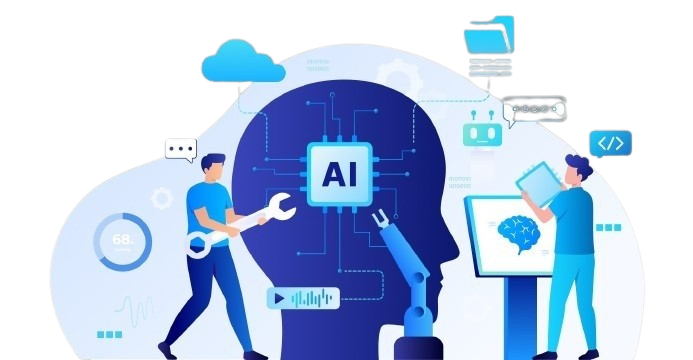
As numerous business leaders are attempting to build a foothold in the sphere of operationalizing Artificial Intelligence Syansoft Technologies, they are coming up against a dilemma: should they develop proprietary artificial intelligence in a build-from-scratch approach, or work to integrate existing Artificial Intelligence capabilities into their systems AI Integration vs Development ?
The difference between development and integration is not just a technical distinction. It is a strategic choice, impacting time to market, cost, and ROI.
Understanding the Core Difference
To make the right choice, you first need to understand what each path entails.
- In order to properly assess what each strategic alternative means, consider the ramifications of each approach on their business. AI Development is the building of proprietary, customized machine learning models and the development of new architectures, along with the training of new systems on proprietary data sets. This “from-scratch” approach is typically a requirement of the tech giants or organizations where artificial intelligence is the core product.
- AI Integration is the embedding of high-performing pre-built artificial intelligence models (APIs) into everyday workflows and enterprise systems (e.g. CRMs, ERPs) and seamlessly into enterprise business processes.
Why Enterprises Are Prioritizing AI Integration vs Development
Given that building a custom model is a costly, multi-year risk, it is easy to understand why current businesses are prioritizing integration
1. Faster Time-to-Value
AI development, it could take months or years of data labeling and other model tuning just to get it ready for production. In contrast, AI integration helps businesses take advantage of SOTA models instantly. In a matter of weeks, businesses can convert a concept into a live, AI-powered feature. Custom Query Model Deployment Options

2. Reduced Technical Debt
When you create your own models, you take on the responsibility of ongoing maintenance, retraining, and hardware expenses. With AI integration, you choose the option of letting other companies like Google, OpenAI, or Anthropic manage the significant systems and research expenses, while you enjoy the benefits of their systems.
3. Focus on Business Logic, Not Algorithms
Enterprises usually require a new method for processing language, or an alternative way to streamline the resolution of customer service tickets. AI integration is centered on the application of technology.
When Should You Choose Development?
There are still cases when only custom development will work, even with the benefits of integration.
- Extreme Niche Use Cases:
You are working in an area with very specialized data, and public models have never seen anything like yours (e.g., proprietary genomic research).
- Total Data Isolation:
Your security requirements fully dictate no external API calls, even to private enterprise cloud instances.
- Core IP Creation: Your primary value proposition consists of a one-of-a-kind algorithm no one else has.

The Verdict: AI Integration vs Development is the "Sweet Spot"
Most organizations are not looking to become an AI research lab, but an AI-powered business.
When AI integration is done effectively, it is a force multiplier, allowing organizations to do more with their existing talent. It does not replace systems, it makes them smarter. Whether it is invoice processing automation with your ERP, or predictive lead scoring with your CRM, the best companies are the ones that focus on buying and blending rather than building from zero And Contact With Syansoft Technology.
FAQS
What's the difference between AI integration and AI development?
AI integration means connecting existing AI tools or models (like an LLM API) into your current systems and workflows. AI development means building a custom AI model or solution from the ground up, tailored specifically to your data and use case.
Which is cheaper — AI integration or custom AI development?
AI integration is almost always cheaper and faster, since you’re connecting proven, existing technology rather than building and training something new. Custom AI development requires more time, data, and specialized talent, which raises the cost significantly.
When does a business actually need custom AI development instead of integration?
Custom development makes sense when your use case is highly specific, your data is proprietary and central to the value you’re building, or no existing AI tool solves your exact problem well enough — otherwise, integration usually gets you to value faster.
Can a business start with AI integration and move to custom development later?
Yes — this is a common and sensible path. Many businesses validate an idea with integrated, off-the-shelf AI tools first, then invest in custom development once they’ve proven the value and understand their specific requirements better.
What are examples of AI integration versus AI development in practice?
Integration examples include adding a chatbot powered by an existing LLM API, or embedding AI-powered search into an app. Development examples include building a proprietary fraud-detection model trained on your own transaction data, or a custom recommendation engine.