 Skip to content

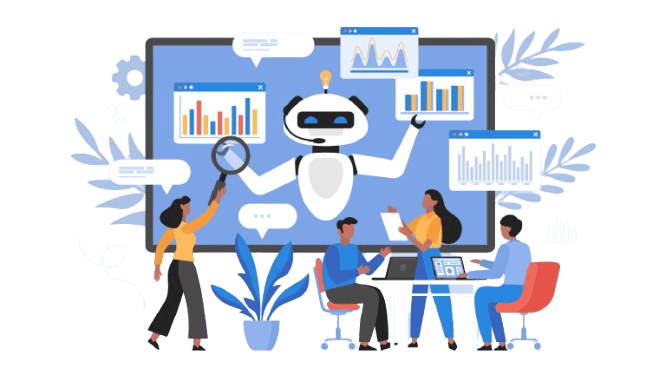
Multi-agent AI systems help enterprises automate complex business workflows by enabling multiple specialized AI agents to collaborate, share information, and complete tasks with minimal human intervention. Unlike traditional automation, these systems coordinate multiple activities, make decisions, and manage end-to-end business processes efficiently.

What Are Multi-Agent AI Systems?
Multi-agent AI systems consist of multiple intelligent AI agents working together to achieve a shared business objective. Each agent is designed to perform a specific task, such as analysing data, managing customer requests, processing documents, or coordinating workflows. A central orchestrator or coordination mechanism manages communication between agents, assigns responsibilities, and ensures tasks are completed in the correct sequence.
For example, in an enterprise procurement process, one AI agent can analyse purchase requests, another can verify supplier information, and a third can check budgets and prepare approval recommendations.
How Do Multi-Agent AI Systems Automate Enterprise Workflows?
Enterprises can use multiple AI agents to connect different departments, applications, and business operations.
Key applications include:
These applications reduce repetitive tasks while improving operational efficiency and collaboration.
Key Benefits of Multi-Agent AI for Enterprises
Implementing multi-agent AI systems offers several business advantages:
Challenges to Consider Before Implementation
Despite their advantages, multi-agent AI systems require careful planning. Enterprises must consider data security, agent coordination, integration with existing software, performance monitoring, and human approval mechanisms.
Clear responsibilities, access controls, testing, and monitoring are essential to ensure reliable and secure AI-driven operations.


How SyanSoft Helps Enterprises Implement Multi-Agent AI
SyanSoft Technologies helps businesses explore intelligent automation through customised AI development and enterprise software solutions. From workflow analysis and AI agent development to system integration, businesses can build solutions that align with their operational requirements.
With the right implementation strategy, enterprises can transform disconnected processes into coordinated, intelligent workflows.

Conclusion
Multi-agent AI systems are transforming enterprise automation by connecting specialised AI agents to manage complex end-to-end workflows. They help businesses improve productivity, reduce operational costs, and make faster decisions. Enterprises adopting this technology can build more scalable, intelligent, and future-ready business operations.
Ready to automate complex business workflows with AI? Connect with SyanSoft Technologies to explore customised AI development solutions for your enterprise.
FAQS
What is a multi-agent AI system?
A multi-agent AI system is a group of specialised AI agents that collaborate to complete tasks, exchange information, and achieve shared business objectives.
How are multi-agent AI systems different from traditional automation?
Traditional automation follows predefined rules, while multi-agent AI systems can analyse information, coordinate tasks, and adapt their actions based on changing requirements.
How can enterprises use multi-agent AI?
Enterprises can use multi-agent AI for customer support, finance, HR, supply chain management, data analysis, and IT operations.
Are multi-agent AI systems secure for enterprise operations?
Yes, when implemented with proper access controls, data protection, monitoring, human oversight, and security policies.
Can multi-agent AI integrate with existing enterprise software?
Yes. Multi-agent AI systems can integrate with existing ERP, CRM, databases, APIs, and other enterprise applications, depending on system compatibility.